HTC has been producing some great Android smartphones, and their latest flagship model is the HTC Sensation, which comes with a range of impressive specifications, we recently showed you some hands on photos of the new HTC Sensation, and have been testing it out over the last 10 days, so its time to let you guys know what we thought about the HTC Sensation.
The first thing you notice about the HTC Sensation is the size of the device, it features a large 4.3 inch qHD display. so the handset has a similar size to the Samsung Galaxy S II we reviewed recently and also features very similar specifications.
Both HTC and Samsung have been leading the pack with their Android smartphones, and HTC’s latest offering will appeal to Android fans who want the latest hardware and features in a stylish design.

Hardware Specifications

The HTC Sensation has a range of impressive hardware specifications, just what you would expect from the latest flagship Android device from HTC, it features a 4.3 inch 4HD display with a resolution of540 x 960 pixels, processing is provided by a dual core 1.2 GHz Snapdragon processor, it also comes with the latest version of Android Android 2.3.3 and HTC’s Sense 3.0.
The HTC Sensation comes with 768MB of ram, you also get 1GB of storage built in, plus a microSD card slot, plus 802.11 b/g/n WiFi, Bluetooth 3.0, A-GPS, a G-sensor, gyro sensor, a proximity sensor, ambient light sensor, and a micro USB 2.0 connection.
The Sensation is equipped with dual camera’s, up front there is a VGA fixed focus camera for video chat, on the back you get an 8 megpaixel camera with a dual LED flash and auto-focus, the camera is capable or recording Full High Definition video in 1080p.
Other features on the HTC Sensation include, DNLA, WiFi and USB tethering, and it also comes with the latest version of HTC’s custom Android user interface, Htc Sense 3.0.

Design, Display, User Interface

The first thing you notice about the HTC Sensation is the size of the handset, it features a large 4.3 inc qHD display, which makes it feel slightly larger than your average smartphone, although it still feels slim and light, measuring 126.1mm long by 65.4mm wide by 11.33mm thick, and it weighs in at 148 grams.
The HTC Sensation takes many of its design cues from earlier HTC devices, it certainly feels very well made and it fits nicely in your hand, with all the buttons easily accessible, there are four buttons on the bottom of the display, which include, home, settings, back and search.
The display on the HTC Sensation is one of the latest qHD displays, it features a resolution of 540 x 860 pixels, everything looks clear and bight on the screen, and it certainly doesn’t disappoint, the display is great for games, and video and also surfing the web.
The UI on the HTC Sensation is the latest version of HTC’s Sense, and with previous HTC devices we have tested HTC’s Sense is a great user interface, one of the best available on the market, and it has a wide range of options which make customizing your UI a breeze.

Processor And Camera

The HTC Sensation features a dual core Qualcomm 1.2GHz processor, and it works exactly like you would expect, everything feels fast on the HTC Sensation, whether you are launching applications, playing games or watching a video, the HTC Sensation’s processor handles everything with ease.
HTC has stepped up their efforts with the camera on the HTC Sensation, providing an 8 megapixel camera with a dual LED flash and built in auto-focus, the camera is capable of recording full HD video in 1080p, and it is certainly an improvement on some of the cameras we have tested on previous HTC devices.
The HTC Sensations camera does a good job at snapping photos and recording video when the lighting is good, it isn’t as good in poor light, but you still get the sort of quality you would expect from a smartphone camera.

Battery Life

The HTC Sensation features a 1520mAh battery, and it works pretty well for every day tasks like surfing the web,checking your email, and playing games, its not quite as good as the battery on the Samsung Galaxy S II, and didn’t last as long when we tested it,  but it is still adequate for every day use.
If you are a heavy user you can expect to have to charge your HTC Sensation on a daily basis, for average users, performing normal tasks like checking email, surfing the web etc, you would probably end up charging your sensation every one and a half to two days.

Conclusion

The HTC Sensation is an impressive smartphone, things that we liked about it were the bright, clear display and the fast processor that made everything feel snappy on the Sensation.
The Design is very nice, and the Sensation feels like a quality, well built smartphone, it fits nicely in your hand and considering its large 4.3 inch display it still feels light and thin.
The user interface (UI) is also very good on the Sensation, with a wide range of features that can be customized to suit your personal needs, we already liked HTC’s previous version of their Sense UI, and Sense 3.0 adds more features and is an improvement over the previous offering.
The HTC Sensation is definitely a smartphone that would be worth checking out, comparing it to the Samsung Galaxy S II, it is a hard choice between the two devices, we would recommend that you check out both devices to find out which one would be best suited for your needs.


Samsung had great success with the original Galaxy S smartphone, and they have just recently released the new Samsung Galaxy S II, a smartphone we have been waiting to get our hands on since it was announced back in February.
The first thing you notice about the Samsung Galaxy S II is the display, it features a stunning 4.3 inch Super AMOLED display, and it is also very slim and light, it comes with Android 2.3.3 out of the box and also features Samsung’s TouchWiz UI, and it also features a dual core processor.

Hardware Specifications

The Samsung Galaxy S II has an impressive range of specifications, you get a 4.3 inch Super AMOLED Plus display,  with a resolution of 800 x 480 pixels and Gorilla Glass, the handset measures in at 123.3 mm by 66.1 mm by 8.5mm and it weighs in at just 116g, making it one of the slimmest and lightest devices on the market with a four inch display.
Processing is provided by a dual core 1.2GHz processor, and the model we tested came with 16GB of storage built in, there is also a micro SD card slot which can take up to 32GB cards, plus you also get 1GB of RAM.
Other specifications on the Samsung Galaxy S II include an 8 megapixel camera with autofocus and an LED flash, the camera is capable of capturing Full High Definition video in 1080p at 30 frames per second, you also get geo-tagging, smile detection, face detection, image stabilization
On the front of the Samsung Galaxy S II there is a 2 megapixel camera for video chat, and it comes with a built in FM radio, A-GPS, it also comes with 802.11 a/b/g/n WiFi, DLNA, Wi-Fi Direct and can also be used as a WiFi hotspot.

Design, Display, UI

The Samsung Galaxy S II measures just 8.5 mm thick, it is quite light for a smartphone with a 4 inch display, and it certainly is very well made and feels like a quality smartphone in your hand.
The back of the Galaxy S II features a textured rear cover, which means it wont easily slip out of your hand and it also features a curved design which makes it easy to hold and also very comfortable.
The Display is where the Samsung Galaxy S II really shines, it features a 4.3 inch Super AMOLED Plus display, which looks amazing, and it also comes with Gorilla glass which should mean it wont scratch and is protected from knocks and bumps.
Everything looks great on the 4.3 inch display, the colors are bright and clear, and everything looks sharp and crisp, its great for watching movies, and playing YouTube videos.

Processor and Camera

The Samsung Galaxy S II Features a dual core 1.2 GHz processor, everything feels really snappy on the Galaxy S II, no delays or lag on launching any of the apps, watching videos, browsing the web, the dual core processor handled everything we threw at it with ease.
The Galaxy S II features an 8 megapixel camera, which comes with a wide range of features built in, it is capable of recording Full HD video in 1080p, and is also great a taking still photos.
Features included in the camera include an LED flash, autofocus, face detection and smile detection as well as built in image stabilization, plus geo-tagging, have a look at the sample photo below which was taken at full resolution.
Here’s a quick sample video taken on the Samsung Galaxy S II camera, in Full HD at 1080p, head on over to YouTube to watch it in full HD.

Battery Life

The Samsung Galaxy S II features a 1650 mAh battery, and it is extremely impressive, after a full charge we used the Samsung Galaxy S II for a full day, basically using every feature you would normally use, email, taking some photos, watching some YouTube videos and we ended up with plenty of juice left.
If you are a heavy user you will probably end up having to charge the Galaxy S II battery once a day, normal use you should get at least a couple of days out of the battery.

Conclusion

The Samsung Galaxy S II is impressive, what sets it apart from the competition is the impressive Super AMOLED Plus display and its snappy dual core 1.2 GHz processor.
If you are in the market for a new smartphones or a new Android device, then we would definitely recommend you take a look at the new Samsung Galaxy S II, we suspect that Samsung’s latest android handset is going to be even more of a success for the company than the original Galaxy S.


We pretty much know that Sprint will be getting the new iPhone 5 when it launches next month, but now it looks like Sprint will also be getting another Apple Product according to a recent report, the ipad 2.
According to the guys over at 9 to 5 Mac, Apple and Sprint have been working on a version of the ipad 2 which is compatible with Sprint’s data network.

As yet it isn’t clear what sort of data connection the Sprint iPad 2 will come with whether it will be Apple’s existing CDMA iPad, which is also available on Verizon, or if the new Sprint iPad 2 will make use of Sprint’s WiMax technology.


Sony has today unveiled its very first iPad docking speaker device in the form of the new Sony iPad Dock X500iP which has been geared to iOS devices and will support Apples iPad. The Sony X500iP has been equipped with a subwoofer supported by a pair of passive bass radiators designed to provide a deep base sound using Sony’s magnetic fluid technology.

It also equipped with a Aux input  and will be arriving in October for around $300. As well as the X500iP Sony has also unveiled their new upgraded ICF-CS15iP iPhone dock and alarm clock.


Sony’s most popular speaker dock the ICF-CS15iP has been upgraded and supports charging and playback from your iPod and iPhone, and it also delivers stereo sound via its Mega Bass and Mega Xpand sound modes. Its also equipped with two independent wake-up alarms, while the 2-5-7 day alarm feature supports different settings for weekdays and weekends, all with the option of waking up to an iPod, iPhone, AM/FM radio, or buzzer.

LG Optimus 3D - 3 dimensions and a headache [Review]

Posted by aashu Tuesday, 13 September 2011 0 comments


The Optimus 3D is something of a novelty, being only the second 3D capable phone in India. However, it isn't the fastest device around, and neither is it the sleekest. It also debuts with Froyo (Android 2.2). Spending Rs. 37k (MRP) on this doesn't make sense, especially when there are other options available albeit without 3D. You must be a real fan of the whole 3D phenomena to opt for the Optimus 3D.

Pros
  • 3D without glasses
  • Dual cameras capture good quality 3D images and 3D videos
  • Excellent display quality- crisp and vivid, in 2D and 3D modes
  • Solid build

Cons
  • Android 2.2 is ancient
  • 512 MB RAM is too little
  • Battery life is mediocre – a day with careful use
  • The handset is bulky


The good old smartphone has held the highest echelons among the mobile phone segment. However, now we have a new category of devices that will be the flag bearers for exclusivity – 3D phones. The first one to arrive in our test center is LG Optimus 3D, a phone that LG (smartly) launched before the HTC Evo 3D, in India. We did a detailed hands-on of the Optimus 3D the moment it arrived in our territory. And now here is the full-fledged review.
Look & Feel
Let’s forget about its standout feature for a bit and besides that, it is a bit of a disappointment in the looks department – it’s thick, and heavy (168 grams). There is a silver strip running down the entire length of the back panel and this adds a bit of shine to the otherwise simple look. Despite its weight, the rubberized feeling does help when you are holding the phone and typing a message with the same hand. The ‘top heavy’ nature of the phone can be a bit disconcerting at first, since it’ll constantly attempt to tilt backwards, headfirst.
The 4-inch display has four touch-based buttons – Menu, Home, Return and Search. While these buttons are backlit, the backlight comes on only when you touch one of them. Kind of defeats the purpose of the backlight!

The right side panel has the 3D button (that switches the phone into 3D mode by basically opening what LG calls a “3D Zone”), and we’ll forgive you for thinking it is the camera key! The HDMI port and the microUSB port are on the other side. Flip the phone over, and there are the dual cameras – for 3D pictures and videos.
Features
The Optimus 3D has a 4.3-inch 3D display (480x800 pixel resolution), and quite frankly, we absolutely loved it. Why? – excellent colour, with only very minor gradation of colours (at times), great brightness levels, fast moving scenes in videos are smoother than most other high-end smartphones (maybe because this display has a quicker refresh rate, don’t really know) and the depth of the 3D content was actually surprising, in a good way. The 3D Zone mentioned earlier contains all 3D content – games, movies and access to the 3D camera.
Before we get back to 3D and its performance, let us look at some of the other features. The ARM Cortex-A9 dual core 1GHz processor and the PowerVR SGX540 graphics power this 3D smartphone. However, we were a bit amazed (and subsequently a bit disappointed) to find that there is only 512MB of RAM to complement this processor. The 8GB of built-in storage can be added to via the microSD card route, up to 32GB. For the photography enthusiasts out there, a smartphone may not always be the best device, but the dual 5MP cameras do have some powerful capabilities – 1080p @ 30fps for 2D videos and 720p @ 30fps for 3D videos. And yes, it takes 3D pictures too! The mini HDMI out port will let you connect to any 3D television as well to enjoy 3D on a bigger display.
The LG 3D UI wrapped around Android is basically an updated version of the one we saw on the Optimus 2X with a slightly tweaked look. The Optimus 3D comes pre-loaded with Android 2.2, and frankly with 2.3 becoming pretty much de facto on phones, this retro step is a bit of a puzzle.

LG Optimus One Lands In India For Rs.13,500

Posted by aashu Sunday, 11 September 2011 0 comments


Just days after it announced that over 1 million LG Optimus One handsets have been sold, LG has announced the launch of the device in India. The Optimus One is a mid range Android handset that will compete with the likes of the Xperia X8 and the Samsung Galaxy 3 and 5.
The Optimus One runs the latest version of Android, (Froyo) and gets a 3.2 inch display. There is a decent 3MP camera at the rear. It supports expandable memory up to 32GB. The internal 170 MB of memory is decent enough as well. Connectivity options include 3G, E GPRS and Wi-Fi support.
This phone seems to be a very well spec’d contender vying for your attention in the mid range Android phones segment. LG is also readying a bunch of lower end Android devices as well as the higher spec’d devices soon in India. These would be priced between Rs.8000 and Rs.30,000.
So, would you be considering this one while out shopping next time? 


LG Electronics, which is struggling in its fight to keep up with compatriot Samsung in the high end Android smartphone sector, is looking to consolidate its mid-range segment it seems. Its high end Optimus 2x hasn’t been able to evoke as much interest as the Galaxy S II by Samsung. However, its lower end Optimus One launched last year had seen tremendous success.


The company’s next generation mid-range handset, the Univa – or the E510 was given a hands-on treatment by Norwegian website Mobili and reportedly came out impressed with the device. While we still do not know the official specs of the phone it is expected to be powered by an 800 MHz processor coupled with the Adreno 200 GPU. The device gets 512 MB of RAM which we think should be sufficient for a device in this segment.
The Univa gets a 3.5 inch display with the standard Android resolution of 800*480 and comes with Android 2.3.4 installed. To power the device, it gets a 1500 mAH battery.
Like we said, the device is still not official and as of now we have no word as to when LG plans to launch this one. 

Rumored to release alongside the Galaxy Tab 7.7 and the Wave 3, the Samsung Galaxy Note flew surprisingly below the radar of gadget aficionados. The details on the device were thin, until Samsung recently announced it officially at the IFA.

 Coming in at hefty 5.3-inches of length, the Galaxy Note attempts to blur the line between phones and tablets. A relatively surprising addition is the now out-of-fashion stowaway stylus, which can be used for several tasks such as taking notes, drawing and so on. The phone comes pre-loaded with Android 2.3 Gingerbread. The UI is layered with Samsung’s TouchWiz UI on top, which offers an all new ‘S-Pen’ interface, designed specifically by Samsung to put that good ‘olstylus to best use.
Beneath the pretty interface, a dual-core 1.4 GHz processor beats at the heart of the phone. Developed in-house by Samsung itself, this is the same processor that will power its Galaxy Tab 7.7 tablet. The huge screen boasts of a WVGA Super AMOLED display, while two cameras – 8 megapixels at the back and 2 megapixels at the front – carry out your snapping, recording and video chatting duties admirably.
Despite its colossal length, the device is surprisingly easy to handle, thanks mainly to its 9.65mm width and a surprisingly low 178 grams of weight.
Processor – Dual-core, 1.4Gzh
RAM – 1024 MB
Screen – 5.3” Super AMOLED, 800 x 1280 display
Camera – 8 MP rear, 2 MP front
Storage – 32GB on-board, expandable up to 64GB
Dimensions – 146.85mm (height) x 82.95mm (width) x 9.65mm (depth)


Before the meteoric rise of Android and iOS, Symbian was the most popular platform for smartphones by a distance. Over the years, however, Symbian has not been able to keep up with the competition, and has been reduced to, more or less, an irrelevant smartphone platform. This also meant that Nokia, which was the major manufacturer of Symbian phones, also suffers the same fate in the smartphone market.

 This makes the newly announced Nokia 701 an extremely important device, as it marks a generational shift not both Nokia as well as Symbian. The 701 runs on the all-new Symbian Belle platform, which is a huge step forward from the previous iterations of the platform. Almost every element of the operating system has seen an overhaul – native apps, home screen, menu and everything else.
Beneath the seriously face lifted operating system is a 1GHz CPU and 512MB of RAM that adds to the slick feel of the device. The device comes with 8GB of storage on board, which is expandable up to 32GB with microSD card slot. An 8-megapixel camera with dual-LED flash carries out the snapping and recording duties. Surprisingly, there is no front facing camera here, so no scope for video calling. But perhaps the most striking feature of the phone is its brilliant screen – the next-gen 3.5-inch nHDClearBlack display offering 1,000 nits of brightness.
The Nokia 701 clearly has all the important boxes ticked, and is primed for success. Whether it will or won’t, only time will tell!
Processor – 1.0Gzh
RAM – 512 MB
Screen – 3.5″ 16M-color nHDClearBlack TFT LCD; 1,000 nits of brightness
Camera – 8 MP rear with dual-LED flash
Storage – 32GB on-board, expandable up to 64GB
Dimensions – 115.5mm (height) x 59mm (width) x 10.5mm (depth)


Samsung has just announced its latest Bada phone – the S8600, more popularly known as the Samsung Wave 3. The third iteration of the Wave family maintains the form factor of its predecessors, combining the good old slim shell and brushed metal look with its favorite Super AMOLED screen. Speaking of which, this is a 4-inch 16M-colour display with WVGA resolution. The glass itself is scratch resistant.

The phone features a power packed CPU, clocking in at 1.4 GHz, which is able to handle all tasks thrown at it with aplomb. The 5-megapixel camera at the back featuring a LED flash makes snapping pictures and recording HD video an easy task, while the VGA camera at the front handles the video calling chores.
The phone runs on a brand new version of Samsung’s proprietary Bada OS. This almost feels like a complete revamp of the platform. Everything from the home screen to contextual menus to the web browser has undergone a facelift.
The Samsung Wave 3 is a great package, and is a deserving upgrade to its previous iterations in every way imaginable.
Processor – 1.4 Gzh
Screen – 4.0″ 16M-colour Super AMOLED with 480 x 800 pixels resolution
Camera – 5MP rear with LED flash, VGA front
Storage – 2GB on-board, expandable up to 64GB via microSD card slot
Dimensions – 125.9mm (height) x 64.2mm (width) x 9.9mm (depth)


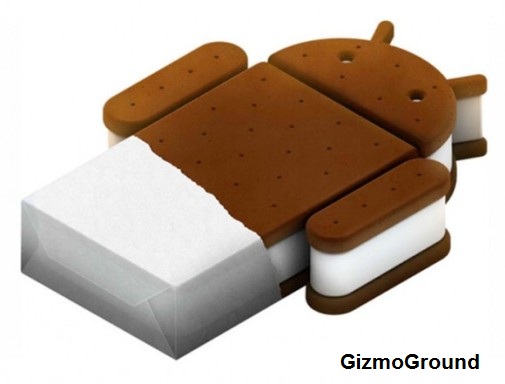
Eric Shmidt, Google’s Executive Chairman, more popularly known as “droid daddy”, recently confirmed Android’s next iteration, Ice Cream Sandwich at the Dreamforce conference in San Francisco. The time frame for the release for this version is slated to be sometime between October and November this year.


 “We have a new operating system, internally known as Ice Cream Sandwich for some reason, which is being released in October/November, which everyone’s really excited about”, 
 said Shmidt.

One of the most striking features of Ice Cream Sandwich is the fact that it combines the functionality of Honeycomb (Android’s tablet OS) with that of Gingerbread (Android’s current smartphone OS). This means that when you buy an Android device – be it a tablet or smartphone – you will be guaranteed of a streamlined experience.

While most features of the new OS remain under tight lock and key, some of the features demonstrated were real-time face tracking and voice recognition, greatly enhancing the camera’s focus shifting feature.

According to reports, the first device to tout the all new operating system from Google will be Samsung’s Nexus Prime. Sony Ericsson will follow suite, as it is expected to bring all of its existing 11 Xperia smartphones (all touting Android 2.3 Gingerbread) to the latest Andriod OS.


Apple's iPhone 5: Smaller Case, 3.7 Inch Screen, New Button


Here's something interesting: we've gotten used to thinking that Apple's next iPhone will have a larger screen. Regardless of the actual dimensions (depends on which rumor you believe), the majority pointed towards a bigger screen. This might turn out to be false in the light of new findings.

Apple's PhotoStream application contains an icos representing a smartphone that doesn't seem to follow the general iPhone design lines. The phone appears to have a 3.7 inch screen (still larger than the iPhone 4's 3.5 inch) but in a smaller overall case. Also, you definitely have to notice a possible rectagular or elongated home button. The image above is a mock-up made after the icon found in the PhotoStream app. What do you think? 


Motorola EX225 Facebook Smartphone Revealed

Posted by aashu Saturday, 10 September 2011 0 comments


It looks like Motorola has a new smartphone in the works in the form of the Motorola EX225 Facebook smartphone, which has been revealed through the Bluetooth SIG website.
We get a look at the device below, although the photo isn’t the best it gives us an idea of what this new Facebook smartphone from Motorola will be like.
So far we know it will feature a physical QWERTY keyboard, a 2.4 inch display, a 3 megapixel camera GSM, GPRS, Edge, 3G, WiFi and Bluetooth connectivity, and there will be single and dual SIM models available.

No details on the operating system as yet, so we have no idea whether or not it will run Android or something else.


UK mobile phone operator virgin mobile has launched a new budget friendly mobile phone in the UK, which will retail for just £10, don’t expect any high end specifications for that price though.
The device in an Alcatel One Touch and it features a two megapixel camera, and a microSD card slot that can take up to 8GB cards, it also comes with a built in Radio and MP3 player, plus WiFi.
The £10 mobile phone will be available shortly from Virgin Mobile in the UK, and you will also have to pay another £10 to purchase a SIM card and mobile credit.

There you were,  just growing accustomed to that shiny new Xperia Arc when Sony Ericsson go around updating the thing with a slightly zippier processor and some eye-catching camera software. By which we mean both eyes. It turns out that not only has Sony Ericsson bumped the processor speed to 1.4 Ghz , it’s added a 3D image capture setting to the Arc’s camera software.


We should emphasize “software”, as the phone doesn’t benefit from a second camera and it shows. The images taken with the 3D panoramic sweep effect setting we were shown  had only the slightest 3D effect, but jagged edges and purple patches aplenty. Unfortunately, nothing else really sets the handset apart from its predecessor, but if you loved the original Arc, then the only problem you’ll have with this new incarnation is Sony Ericsson’s stubborn refusal to stick a dual core chip in there.


Despite first casting our discerning (not to mention modest) eye on its rather flashier sibling, there’s something to be said for Sony Ericsson’s lower profile effort as well. Seemingly taking its design cues from old Samsung feature phones back before samsung took its design cues from litigious fruit, the Xperia Ray is a no non-sense, no gimmicks device.


There was a lot to like, including the slim profile, 3.3 inch screen that still managed to pack in WVGA, respectable 1 Ghz Scorpion and just general lack of compromise in key areas that usually accompanies a phone at that price point. Said price point is apparently hovering around the £20 pay monthly mark, but that’s by no means gospel at this point. The long and short of it is we came away impressed with the amount of phone stuck in such a respectably diminutive package
.


The Samsung Galaxy S II has been a massive success for Samsung, we recently heard that Samsung had sold over 5 million Samsung Galaxy II smartphones in under three months, and the device is about to go on sale in the US shortly.
The Samsung Galaxy S II will be available with a range of mobile operators in the US, and now it looks like it is headed to T-mobile as the Samsung Hercules.
According to a recent report, the Samsung Hercules is rumored to be T-Mobile’s first HSPA+ 42Mbps smartphone, and it looks like the T-Mobile version will feature a 4.5 inch multi-touch touchscreen display as opposed to a 4.3 inch version on the original Galaxy S II.
The rest of the specifications will probably be very similar to the original Galaxy S II, which comes with a dual core 1.2GHz processor, 1GB of RAM and 16GB of built in storage.
As soon as we get some more information on the T-Mobile Samsung Hercules we will let you guys know, have a look at our Samsung Galaxy S II review to see what we thought of it.

Samsung Galaxy Mobiles are very popular these days. Samsung is adding more mobiles in their Galaxy Series with new mobile launches in India. Samsung recently launched 3 new Samsung Galaxy Mobiles in India. Samsung Galaxy mobiles comes with features like Android OS, 3G, Touchscreen Facility and main thing is the reliability of Samsung brand. Here are few of the Samsung Galaxy Mobiles Price list. Samsung Galaxy Mobiles Price may vary from store price.


Samsung GALAXY Mobiles Price List: (Updated - May 2011)


  • Samsung B7510 Samsung Galaxy Pro Price: Rs. 12200 (2GB MicroSD Card Free)
  • Samsung I9003 Samsung Galaxy SL Price: Rs. 19900
  • Samsung i5503 Samsung Galaxy 5 Price: Rs. 9,000 (2GB MicroSD Card Free)
  • Samsung S5670 Samsung GALAXY Fit Price: Rs. 10900 (2GB MicroSD Card Free)
  • Samsung S5830 Samsung GALAXY Ace Price: Rs. 15000 (2GB MicroSD Card Free)
  • Samsung I5510 Samsung Galaxy 551 Price: Rs. 9400
  • Samsung I9000 Samsung Galaxy S Price: Rs. 25000
  • Samsung i5801 Samsung Galaxy 3 Price: Rs. 11909 (2GB MicroSD Card Free)
  • Samsung S5570 Samsung GALAXY POP Price: Rs. 9200 (2GB MicroSD Card Free)
  • Samsung I9003 Samsung Galaxy S LCD Price: Rs. 20000

Popular Posts